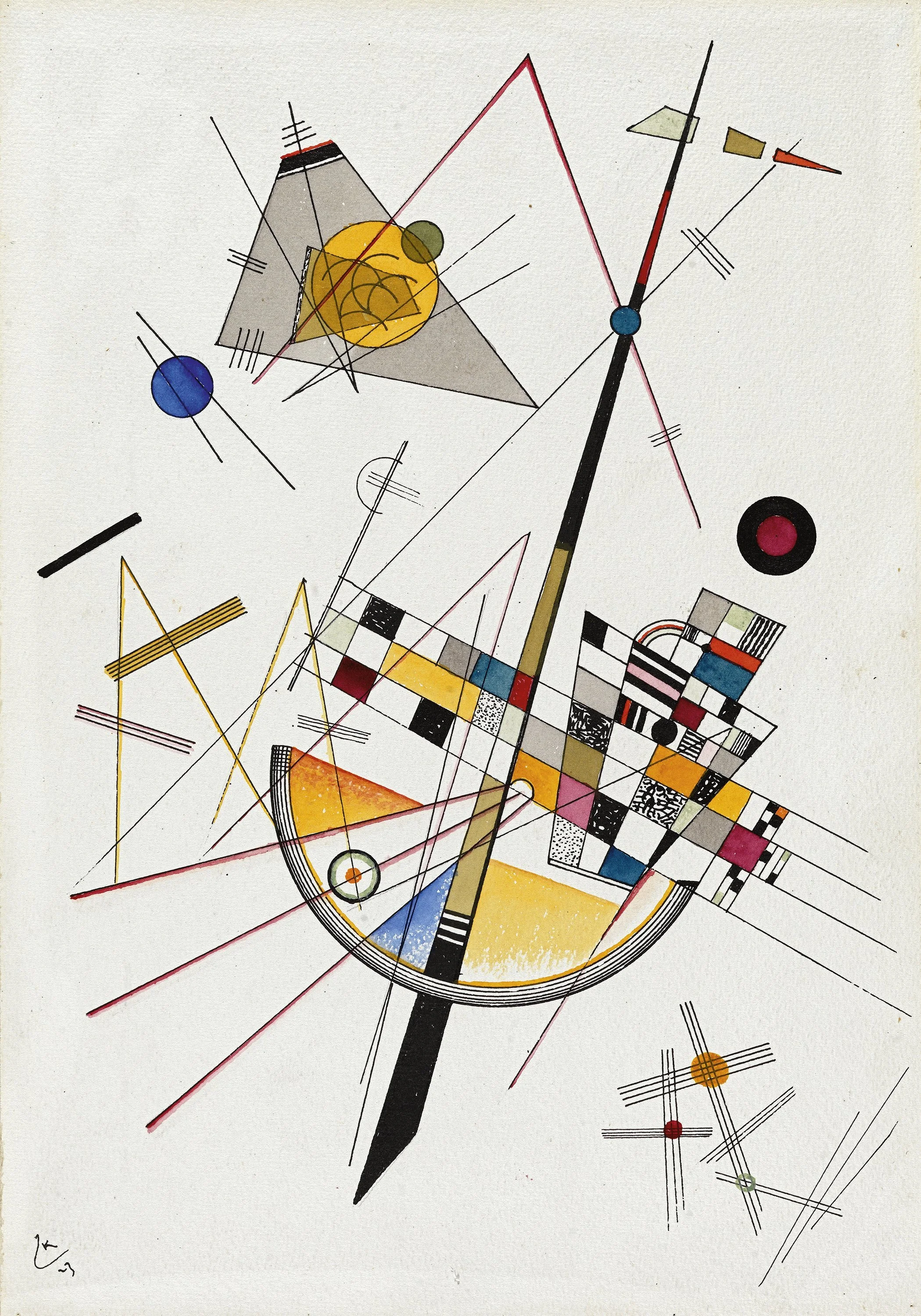
The Spiritual in Art: Kandinsky’s Vision Beyond the Canvas

Wassily Kandinsky didn’t just paint; he sought to transport the viewer beyond the visible, to a realm where color, form, and composition can awaken the soul.
In The Spiritual in Art, Kandinsky lays out his revolutionary belief that art is not simply a reflection of the material world but a conduit to something higher, something intangible, something spiritual. This work isn’t just an exploration of abstraction; it’s a map for how art can connect us to deeper truths, drawing on universal forces that transcend the physical realm.
At a time when abstraction was beginning to emerge as a dominant force in art, Kandinsky made a compelling case for art that could speak directly to the spirit, bypassing the intellect and stirring something profound within the viewer. This wasn’t just a call for aesthetic innovation—it was a vision for art as a transformative, almost mystical experience.
Color: The Spiritual Language of the Soul
In Kandinsky’s world, color is far more than pigment: it is a universal language that speaks directly to the soul. Red isn’t just “bright” or “bold”: it embodies energy, power, and passion. Blue isn’t just “calming” or “cool”: it represents depth, contemplation, and tranquility.
These emotional associations, Kandinsky argued, are not personal preferences but universal truths that resonate deeply with human consciousness. For him, the artist’s task was to use color not merely to depict the world, but to elicit deep, emotional responses that communicate something beyond words.
This notion of color as a spiritual language transforms the artist’s palette into a powerful tool, one that can evoke joy, despair, or even transcendence. Kandinsky’s work challenges us to engage not only with the visual but with the emotional and spiritual undercurrents that each color can stir.
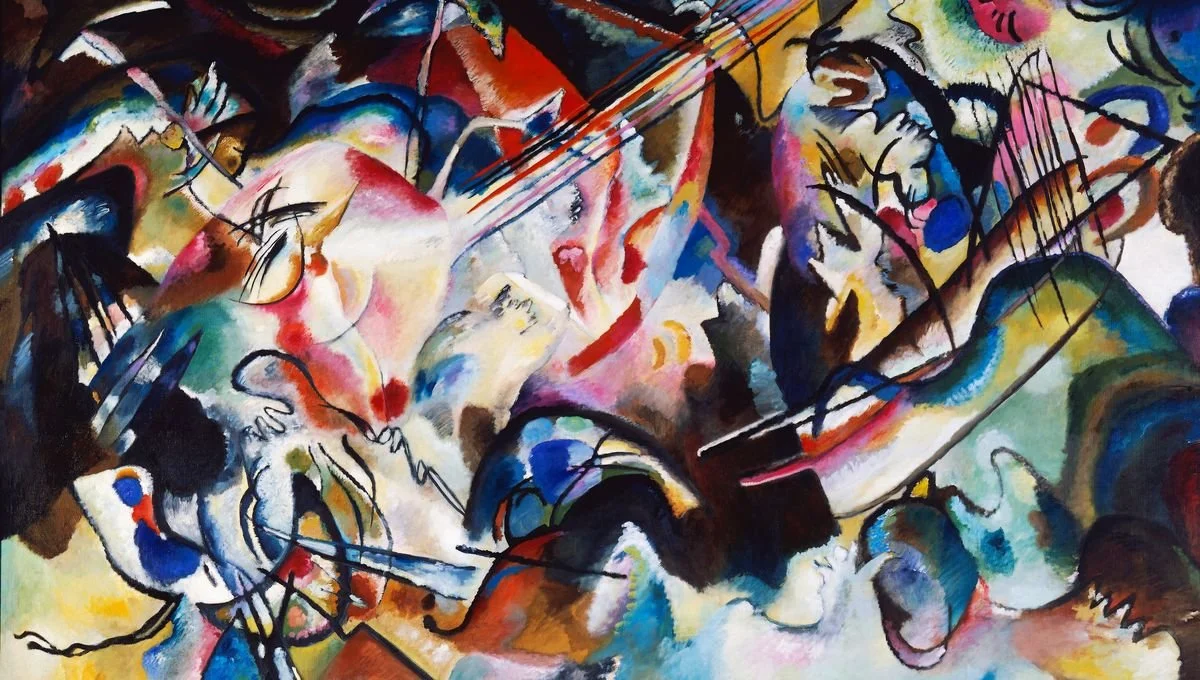
Form and Composition: The Architecture of Emotion
While color stirs the heart, form speaks to the very essence of the soul. Kandinsky’s theories on form elevate the geometry of painting to a spiritual endeavor. To him, shapes were not just aesthetic choices but vibrations—living, breathing entities that could resonate with the deepest, most unconscious aspects of the viewer. Each line, curve, and angle carries a weight that transcends mere representation, embodying an emotional truth that can’t be captured in words.
This elevated view of form transformed the way we perceive abstraction. What Kandinsky offers is not just a departure from realism, but a movement towards a new kind of art—one where the form itself becomes a vehicle for the transmission of spiritual truths.
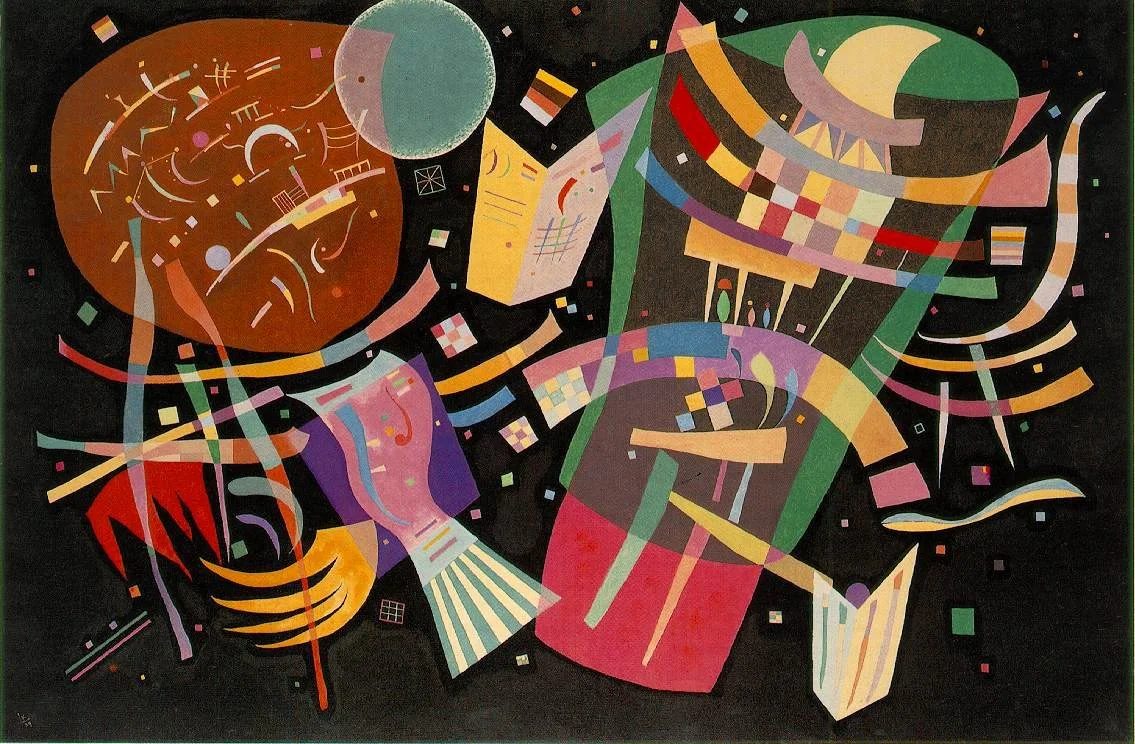
The Artist as a Spiritual Guide
In Kandinsky’s framework, the artist is not just a creator of beautiful works; they are a guide, a conduit for higher truths. Art, in this view, is not just something to be looked at—it is something to be felt, experienced, and internalized. For Kandinsky, the artist must look inward, tapping into the spiritual forces that lie at the heart of human experience, and then use their work to convey that connection to the world. This is not a passive act of creation; it is a profound, spiritual journey.
For Kandinsky, the act of painting was itself a spiritual awakening, an opportunity to connect with something beyond the physical realm. His belief that art can elevate consciousness and inspire change resonates with us today, as it offers a powerful framework for understanding art’s potential to transform not just the individual but society as a whole.